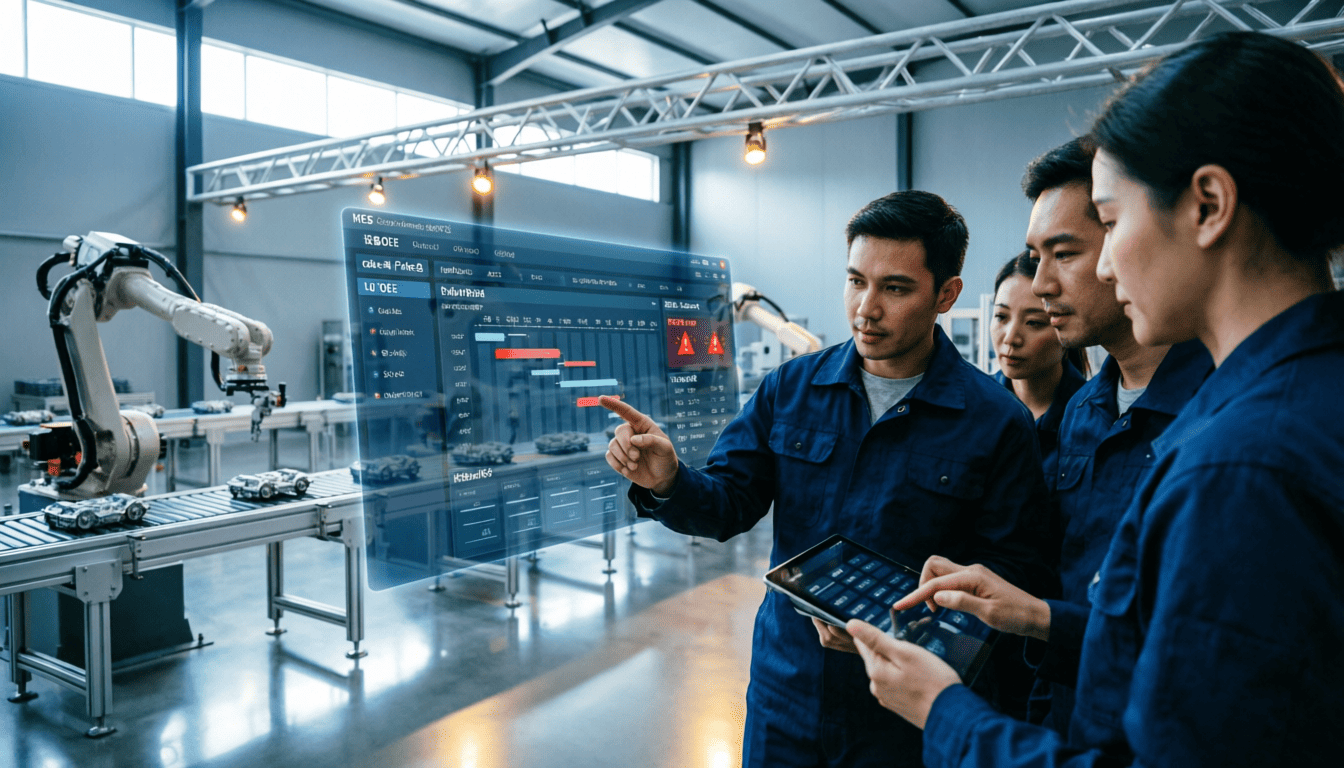
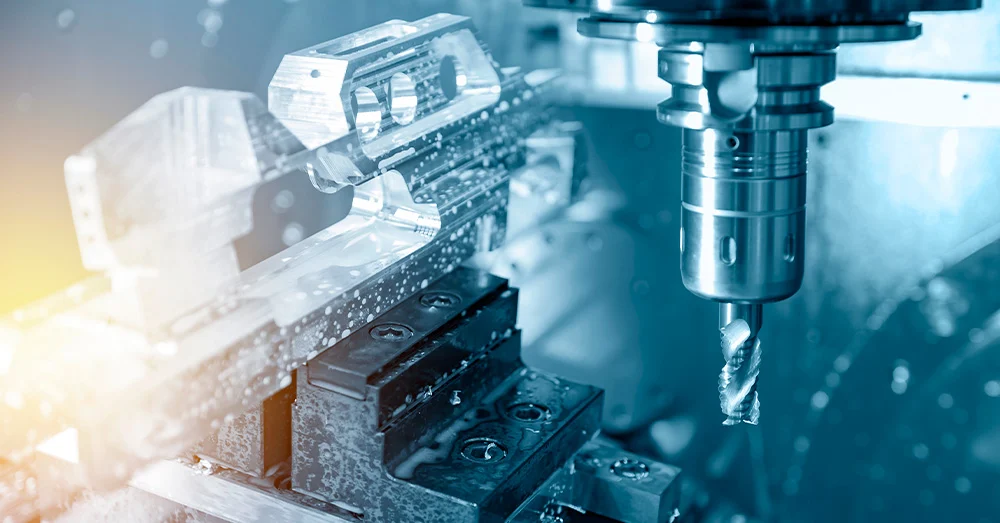
Do precision and productivity in complex machining still elude you? The latest generation of numerically controlled machine tools (NCMTs) are revolutionizing industry by combining automation and micrometric accuracy (< 0.001 mm), transforming demanding sectors such as aeronautics and medical technology thanks to their ability to sculpt geometries inaccessible to conventional methods. These technologies eliminate waste via the F2F (File to Factory) digital chain, linking CAD/CAM to G-Code, while enabling 5-axis machining of complex shapes in a single pass. Discover how this marriage of advanced programming and cutting-edge mechanics redefines quality and repeatability standards in modern manufacturing.
- What is a numerically controlled machine tool (NCMT)?
- The heart of the system: anatomy and operation of the numerical controller
- From design to finished part: the F2F digital chain
- The different types of numerically controlled machine tools and their applications
- Diagnosis and prevention of common MOCN faults
- The future of machine tools: towards intelligent, connected production
What is a numerically controlled machine tool (NCMT)?
In modern industry, precision and automation are transforming production. Numerically controlled machine tools (NCMTs) use computer programs to control their movements, revolutionizing parts manufacturing. Their history began in 1952 with MIT's first CNC milling machine, controlled by perforated bands, marking a turning point towards industrial automation.
The original numerical control (NC), based on perforated belts, has evolved into Computer Numerical Control (CNC), integrating computerized systems. These machines calculate complex trajectories, adapted to the requirements of the customer. industry 4.0. They are now more responsive and versatile, for high-precision processing of demanding materials, such as thread milling at 62Rc or hard machining at 70Rc.
The benefits are tangible: micrometric precision (<0.001 mm), perfect repeatability and increased productivity. In industrial engineering, these advantages make it possible to produce complex parts without manual intervention. The aerospace and automotive sectors depend on them to guarantee quality and efficiency, as in the manufacture of aircraft turbines or automotive engine blocks, where consistency is irreproachable. Companies like Impact Machine use these technologies to machine critical components, such as crane gears or threaded pipes, to tight tolerances.
Repeatability, measured in micrometers (μm), ensures that each part maintains the same dimensions over thousands of cycles. This depends on machine rigidity, feedback systems (linear scales) and control of thermal variations. These parameters, combined with advanced software, optimize tool paths before production, minimizing defects. In addition, MOCNs can be used for a wide variety of processes, including milling, turning, grinding, electro-erosion and plasma cutting, to meet the needs of agriculture, construction and heavy industry.
The heart of the system: anatomy and operation of the numerical controller
The essential components of the control cabinet
The PLC controls the machine's logic, managing safety and automated sequences with millimetric precision. Axis control translates instructions into synchronized movements on X, Y, Z via ballscrews or linear motors, guaranteeing maximum productivity. accuracy less than 0.001 mm, essential in aeronautics and medical applications.
The Human Machine Interface (HMI) simplifies interaction with touch screens and real-time diagnostics. Visit Modern HMI reduce human error and the learning curve with multilingual interfaces for monitoring speed, temperature and tool status.
Programming and languages: how does the machine understand orders?
G-Code (ISO 6983 standard) encodes parameters such as speed (S) or coordinates (X, Y, Z). Despite its proprietary variants, it is the cornerstone of CNC programming. Conversational interfaces and CAM (Computer-Aided Manufacturing) software transform 3D CAD models into CNC instructions, eliminating manual errors.
Manufacturers like FANUC include simplified functions: the G96 automatically adjusts speed for optimum surface quality, illustrating the move towards intuitive interfaces.
Locating in space: axes and modes of movement
The Cartesian system defines movements via X, Y, Z, organized according to the direct trihedron rule. Polar mode is used for circular trajectories, while 5- or 6-axis interpolation enables 3D machining without manual repositioning.
Linear motors eliminate the mechanical backlash of ball screws. These advances, combined with optimized planning, increase feed speed to 130 m/min, increasing industrial productivity.
From design to finished part: the F2F digital chain
The F2F (File to Factory) digital chain represents a radical transformation of manufacturing processes. It is based on an integrated digital data flow, linking the design to the physical production of a part. This system guarantees perfect consistency between the virtual model and the real part, reducing waste, at the heart of lean manufacturing methodologies, such as the elimination of 7 Muda.
The process revolves around several key stages :
- CAD (Computer-Aided Design) The creation of a 3D model using software such as CATIA generates a DFN (Digital Definition) file. This digital document replaces traditional drawings, avoiding the errors associated with manual interpretation.
- CAM (Computer-Aided Manufacturing) The DFN is imported into a CAM program. The programmer then defines tools, paths, cutting speeds and feeds, optimizing efficiency.
- Post-processor: A crucial stage where the software translates generic paths into G-code, the machine-specific language. This “translator” complies with standards such as ISO 6983 for flawless execution.
- Simulation and transfer Before machining, the program is simulated to avoid collisions. Once validated, it is transferred to the CNC machine tool, ready to produce the part with an accuracy of less than 0.001 mm.
This process illustrates modern automation, where every step is interconnected. CAD and CAM eliminate manual steps, while digital simulation prevents costly errors. By integrating standards such as STEP-NC, companies adopt an agile approach, reducing production times and optimizing resources. The F2F chain embodies a industrial revolution, combining technological innovation and operational performance.
The different types of numerically controlled machine tools and their applications
From 3 to 5 axes: a question of complexity
Numerically controlled (CNC) machine tools are distinguished by their number of axes, determining their ability to handle complex shapes. 3-axis models (X, Y, Z) enable classic depth machining, suitable for prismatic parts. The 4- and 5-axis versions add rotation (table or spindle head), for machining 3D geometries in a single operation. This eliminates repositioning, guaranteeing greater precision. These technologies are crucial in sectors such as aeronautics, where tight tolerances (down to the micron) prevent critical defects in engines or landing gear.
Overview of the main CNC machining technologies
| Machine type | Operating principle | Main applications |
|---|---|---|
| CNC milling machine (or machining center) | Removal of material from a fixed part using a rotating tool (milling cutter). | Machining of prismatic parts, molds and prototypes in wood, aluminum or engineering plastics. |
| CNC lathe | Removal of material from a rotating part using a fixed cutting tool. | Manufacture of revolutionary parts (axles, screws, flanges) for the automotive and general mechanical industries. |
| Electrical discharge machining (EDM) | Removal of material by electrical discharge, without contact between electrode and workpiece. | Machining of very hard materials (titanium, stainless steel) for the aerospace, medical and electronics industries. |
| Cutting (Plasma, Waterjet) | Thermal (plasma) or mechanical (high-pressure water jet) cutting of sheet metal. | Boilermaking, metal or composite cutting for automotive, architectural or prototype applications. |
Sectors transformed by numerical control
CNC machines are redefining manufacturing in demanding fields. In aeronautics, they produce one-piece parts (heat sinks, wings) with unrivalled precision, reducing assembly and weight. The medical sector relies on them for orthopedic and dental implants, where micrometric tolerances guarantee patient safety. The automotive industry uses these technologies for engines and transmissions, optimizing quality and production speed. Finally, the energy sector (nuclear, wind power) benefits from their ability to machine components that can withstand extreme stress. Thanks to their repeatability and flexibility, these machines meet critical needs in terms of safety, performance and innovation.
Diagnosis and prevention of common MOCN faults
Numerically controlled machine tools (NCMTs) are a mainstay of modern manufacturing. Yet, despite their precision, they remain vulnerable to faults that can be costly. Rigorous preventive maintenance and the expertise of the operator-setter are key levers for avoid unplanned downtime and guarantee production quality. Ignoring these aspects means risking increased repair costs and a loss of competitiveness.
- Positioning or tracking error A deviation between the programmed position and the one executed by the axis. This may result from a problem reading the scale or a fault in the drive system. For example, a faulty encoder or a worn ballscrew can induce a critical offset.
- Excessive mechanical play Wear and tear on components such as ball screws and linear guides generates backlash that is detrimental to precision. This phenomenon results in irregular surfaces, especially when reversing direction, impacting the quality of machined parts.
- Vibrations (grazing) Undesirable oscillations caused by an unsuitable machining strategy, a blunt tool or insufficient workpiece clamping. These vibrations degrade the finish and can cause long-term machine damage.
Behind the sophisticated automation of CNC machines, the human factor remains essential. The know-how of an experienced machinist enables him to diagnose faults, adjust parameters and design effective maintenance routines. When faced with a positioning fault, it's the ability to identify whether the problem stems from a poorly calibrated axis or a faulty encoder that will make the difference. Human expertise, combined with technology, is the key to success. to fully exploit the potential of the CNC machine tool.
The future of machine tools: towards intelligent, connected production
Numerically controlled machine tools (NCMTs) are no longer isolated islands, but key players in an interconnected industrial ecosystem. In the factory of the future, they communicate in real time with ERP systems, digital twins and IoT sensors, enabling total traceability and greater responsiveness to market fluctuations. This evolution marks a turning point towards autonomy and continuous optimization.
Artificial intelligence (AI) transforms the MOCN into a self-learning machine. Algorithms analyze vibration, temperature or wear data to adjust cutting parameters in real time, avoid unexpected breakdowns or compensate for tool wear. According to a study quoted by SXE-Consulting, this predictive maintenance reduces stops by 30 to 50 %, A critical lever for manufacturers faced with rising capital costs.
This revolution is part of the synergy between Lean Management and Industry 4.0. Data from MOCNs are fed into predictive models that optimize not only production but also the supply chain, This reduces excess inventory and delivery times. The example of 5-axis machining centers illustrates this synergy: their ability to produce complex geometries in a single pass reduces post-processing steps, aligning speed and quality.
Mastering CNC is no longer an option, but a strategic requirement. Companies that integrate these technologies anticipate the challenges of custom manufacturing, sustainability and global competition. As SXE-Consulting's analysis of operational performance underlines, the connected factory transforms every machine into a source of actionable data, driving industrial excellence through fluid orchestration between humans and machines.
CNC machines revolutionize industry with micrometric precision, productivity and complex machining. Integrated into the F2F chain, they optimize manufacturing by reducing waste. With Industry 4.0 and AI, they are evolving towards greater autonomy, becoming levers for industrial excellence and global competitiveness.