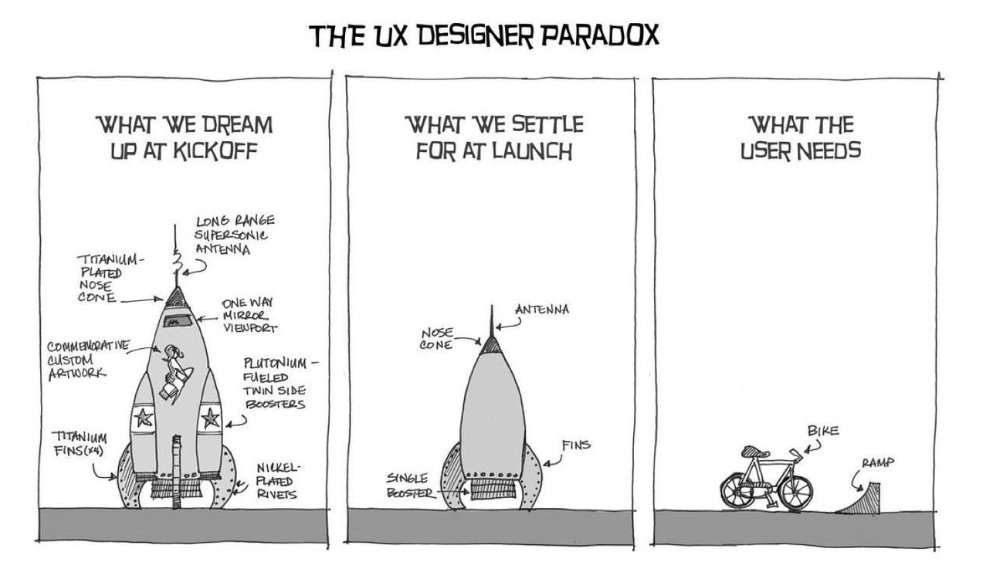
It is crucial to understand user expectations and needs when designing products and services. The image above perfectly illustrates the “UX Designer’s Paradox”, a key concept for anyone interested in ergonomics and user experience.
1. What We Imagine at the Start
When we begin a new project, our imagination and ambition drive us to dream big. We envisage revolutionary features and sophisticated designs. In the image, this phase is represented by an extremely complex and advanced rocket, equipped with:
- Long-range supersonic antennas
- A unique panoramic view
- Plutonium-powered side thrusters
- Titanium fins
- Nickel-plated rivets
This initial dream is often fuelled by enthusiasm and the desire to create something extraordinary. However, it can sometimes be disconnected from the real needs and expectations of end users.
2. What We Compromise On at Launch
As the project progresses, we have to face various constraints: budget, time, technical feasibility, and so on. These constraints force us to make compromises and simplify our initial vision. The elaborate rocket turns into a more basic version:
- One antenna
- A simple nose cone
- Fins
- A single thruster
These adjustments are necessary to ensure that the product can actually be launched, but they can sometimes feel like a downgrade compared with the initial idea.
3. What the User Really Needs
The most crucial point of the paradox is often discovered when interacting with users. Frequently, their needs are much simpler and more direct than what we had initially planned. In the image, what the user really needs is represented by a simple bicycle with a ramp.
This need is a far cry from the complex rocket imagined at the outset. It illustrates the importance of understanding that users are looking for practical and effective solutions to their specific problems. An elaborate design overloaded with features can often prove useless and unappreciated if it does not directly meet the user’s needs.
Conclusion: The Importance of User Research
The UX designer’s paradox reminds us of the importance of staying in tune with users throughout the design process. Here are a few recommendations to avoid this trap:
- Involve Users Early and Often: Incorporate user feedback from the earliest stages of the project.
- Prototyping and Testing: Use prototypes to test ideas and concepts with real users before developing them fully.
- Simplicity and Effectiveness: Focus on simple, practical solutions that directly meet users’ needs.
- Flexibility: Be prepared to adjust and simplify the initial vision to stay aligned with constraints and user feedback.
The success of a product rests on its ability to meet users’ real needs. It is essential to create solutions that are both innovative and user-centred. Contact us to find out more about our services and how we can help you achieve your user experience objectives.

Xavier Schuster
Consultant at SXE Consulting. Industrial consulting firm based in Luxembourg, 25 years of experience in operational excellence.
View profile →