Theindustrialisation of a product is a critical phase in the life cycle of an industrial project. It consists of moving from prototype to series production, while guaranteeing quality, cost and lead times. Yet this stage is often underestimated, leading to delays, cost overruns or series defects.
What is product industrialisation?
Theindustrialization is the process that makes it possible to transform an idea or a prototype into a product manufactured at scale. It involves:
- Themanufacturing engineering.
- The tooling design.
- The process validation.
- The operator training.
- The Production ramp-up carried out progressively.
It is a cross-functional effort involving R&D, production, quality, purchasing and logistics.
The key stages of industrialisation
- Analysis of the functional and technical specifications
The starting point is a technical specification document that is clearly defined, including:- The technical specifications.
- Cost, weight and durability constraints.
- The standards to be met.
Tip : Use a technical specification template so that nothing is forgotten.
- Design for industrialisation (DfM – Design for Manufacturing)
Adapt the product so that it is easy to manufacture. Examples:- Reducing the number of parts.
- Standardising components.
- Choosing materials suited to the manufacturing processes.
- Defining the industrial process
Which manufacturing process should be used? Machining, injection moulding, welding, etc.
Map out each step and identify potential bottlenecks . - industrial validation
The pilot or pre-series phase is used to test:- Technical feasibility.
- Product quality.
- Process performance (OEE, conformity rate).
- Montée en cadence
A gradual transition to series production, with rigorous monitoring of industrial KPIs.
The essential tools
- Standard Operating Procedure (SOP) : documents detailing each operation.
- Carte de contrôle : to monitor process stability.
- Ishikawa diagram : to identify the causes of defects.
- 8D analysis : to resolve recurring quality problems.
The role of the supply chain in the industrialisation of an electric scooter
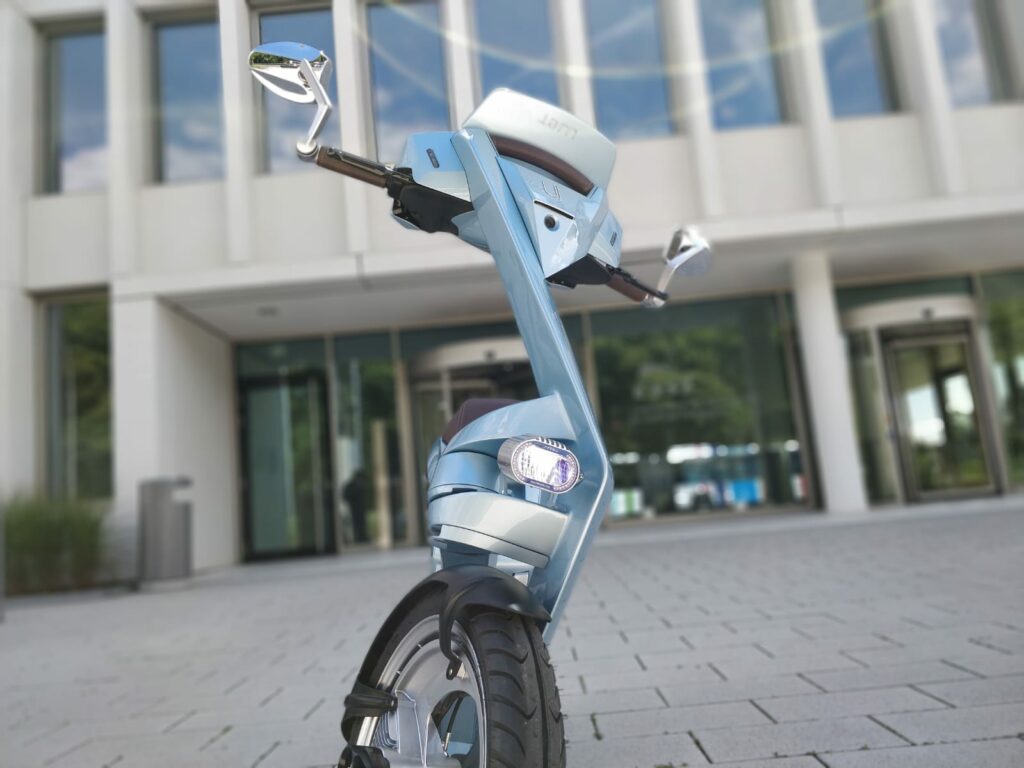
The industrialisation of a product such as an electric scooter relies on a well-controlled supply chain and on strategic partnerships with key suppliers. Contrary to popular belief, the success of a high-tech product does not depend solely on its design or its features, but also on the reliability of the components and on the quality of the subcontractors.
In the case of an electric scooter, several critical elements determine the final performance:
- The electric motor (power, efficiency, durability),
- The lithium-ion battery (range, charging time, safety),
- The battery management system (BMS),
- The regenerative braking,
- The light-alloy frame (aluminium or composite).
Each of these components is produced by a specialised supplier. The choice of these partners is therefore strategic : a faulty component can compromise safety and perceived quality, or even lead to a costly recall.
Supplier selection
Supporting companies in the selection and evaluation of their suppliers, particularly in complex industrialisation projects such as that of an electric scooter. Rigorous selection is based on a methodology that includes:
- Auditing potential suppliers : visits to production sites, analysis of quality processes, ramp-up capacity.
- Technical and industrial evaluation : compliance with standards (ISO, CE, UN38.3 for batteries), component traceability, control of tolerances.
- Putting in place a customised evaluation grid : ratings on quality, responsiveness, innovation capacity and CSR policy.
The role of the industrialisation manager in this context
The responsable industrialisation or theindustrialisation engineer leads this complex project. Their missions:
- Coordinating the technical teams.
- Managing deadlines and budgets.
- Ensuring lean project management.
- Implementing collaborative and participative management.
Their success depends on their ability to anticipate risks, to communicate and to innovate.
Pitfalls to avoid
- Over engineered : designing an overly complex product that is difficult to manufacture.
- Underestimating the lead times for tooling assembly.
- Neglecting operator training.
- Failing to integrate the supply chain right from the start.
Conclusion
Theindustrialisation of a product is much more than a technical step: it is a strategic project that determines the profitability and competitiveness of the product on the market.
By relying on a structured methodology, on project management tools, and on a global vision of the supply chain, companies can achieve this transition successfully.

Xavier Schuster
Consultant at SXE Consulting. Industrial consulting firm based in Luxembourg, 25 years of experience in operational excellence.
View profile →