Do you have an innovative idea but dread the costly contingencies of industrialization? The industrial prototype is your strategic lever for validating every technical, aesthetic and functional aspect before series launch. Discover how this crucial phase enables you to detect design flaws, control costs through iterative testing and accelerate time-to-market thanks to a proven methodology. Whether you're at the conceptual mock-up stage or the final industrialization prototype, this guide reveals the keys to securing your project, optimizing production and turn your idea into a viable industrial product.
- Definition and fundamental role
- Validation objectives
- Advantages and disadvantages
- Types of industrial prototypes
- Prototyping steps
- Role in optimizing product development
- What is an industrial prototype, and why is it essential?
- The key benefits of prototyping to secure your project
- From concept to prototype: key stages in the process
- Beyond the prototype: preparing for industrialization and mass production
- Support for successful industrial prototyping
Definition and fundamental role
Industrial prototyping refers to the creation of a physical or functional model of a product, strictly in line with its initial design. This key stage enables validate technical, aesthetic and functional characteristics before mass production.
In the development phase, industrial prototyping acts as a bridge between idea and production. It enables design theories to be tested under real-life conditions, limiting the risk of series failure.
Its implementation follows a structured process: 3D design, manufacture of models, rigorous testing. These steps ensure technical validation and cost optimization.
Validation objectives
Industrial prototyping focuses on three key areas reliability, functionality and design. Each prototype undergoes mechanical, thermal and visual tests to guarantee conformity.
To ensure reliability, materials and assemblies are subjected to extreme stress. Functional prototypes reproduce the stresses of use in order to identify points of weakness.
Functional tests assess actual performance: ergonomics, interference between components, durability. These validations enable pre-production adjustments.
Aesthetic validation examines finishes, textures and ergonomics. Visual prototypes are used to present the product to customers or investors.
Advantages and disadvantages
| Benefits | Disadvantages |
|---|---|
| Minimize the risk of costly production errors | Costs vary according to prototype complexity |
| Budget control through low-cost iterations | Potentially long lead times for advanced prototypes |
| Early testing reduces development time | Need for specialized technical expertise |
| Improved communication between teams and with customers | Complexity of integrating industrialization constraints |
Types of industrial prototypes
Industrial prototypes are differentiated by their level of sophistication and specific purpose. The conceptual model (Proof of Concept) validates the basic idea with economical materials.
Aesthetic prototypes focus on design and finishes, without necessarily reproducing all the functions. They are used for commercial presentations.
Functional prototypes test mechanical and electronic performance under real-life conditions. The industrial prototype, the most advanced, This is an exact reproduction of the final product for user testing.
Each type responds to a distinct need technical exploration for the first phases, full validation for the final stages before production.
Prototyping steps
Manufacturing follows a rigorous process: technical design, 3D creation, physical realization and final testing. Each step is crucial to guarantee prototype quality.
The preliminary phase includes defining requirements via specifications, creating digital mock-ups and identifying materials. This enables us to’anticipating technical challenges.
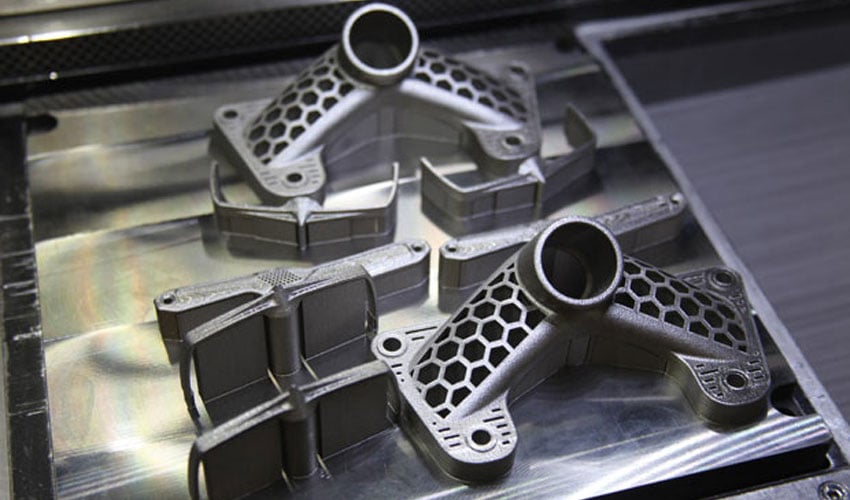
The manufacturing process uses technologies such as 3D printing, CNC machining or silicone molding. The choice depends on the level of fidelity required and budgetary constraints.
Final tests cover strength, performance and ergonomics. Feedback is used to’adjust the prototype before final validation.
Role in optimizing product development
By integrating industrial prototyping, companies can reduce post-production modification costs by 40%. This phase acts as a buffer between design and manufacturing.
Prototype iterations avoid costly serial errors. Tests are used to optimize materials and assembly methods.
Prototypes also make it easier to regulatory validation and investor demonstrations. They form the basis for certification and the definition of manufacturing processes.
By involving experts at this early stage, manufacturers gain in agility and flexibility. reduce industrialization times by 30% on average.
What is an industrial prototype, and why is it essential?
Definition: much more than a simple model
An industrial prototype materializes a concept to validate its technical, functional and aesthetic characteristics prior to series production. Unlike a mock-up, it faithfully reproduces the final product in terms of materials, design and functionality, serving as a quasi-operational version. This key stage guarantees product feasibility, by anticipating the challenges associated with its manufacture, use and durability. Prototypes often use materials close to those of final production, such as resins or metals, for rigorous testing, ensuring accurate assessment of strength, flexibility or thermal properties.
Strategic role in the product development cycle
The industrial prototype is used to check and validate the design in real-life conditions, before launching mass production. This validation reduces technical and financial risks, by detecting faults early, when correction is less costly. Integrated into industrial engineering, This process secures the project by optimizing reliability, costs and lead times. For example, a functional prototype tests mechanical constraints, while an industrialization prototype validates compatibility with production tooling, thus avoiding costly errors in the final phase. This proactive approach avoids delays and major revisions, while guaranteeing compliance with regulatory standards. Structural validation phases (EVT, DVT, PVT) ensure that each component meets technical and user experience requirements before mass production.
The key benefits of prototyping to secure your project
Industrial prototyping is a decisive step for guarantee project success. By validating technical and functional choices at an early stage, it secures investments while accelerating the transition from idea to production.
Minimize the risk and cost of errors
Design failures or operating errors detected too late generate exorbitant costs. Prototyping helps reduce risks by identifying these problems at a stage when correction is simple and cost-effective. Early detection of failures avoids batch recalls or costly tooling redesigns. For example, errors to be avoided during product industrialization can be anticipated through prototype testing, as explained in this detailed article. The cost control is thus strengthened, limiting financial contingencies.
Control the budget and optimize the development cycle
Modern technologies, such as 3D printing, speed up product validation. They make it possible to test variants without investing in fixed equipment, reducing time-to-market. This approach favors optimized development cycle, by aligning stakeholders' expectations around a tangible object. Here are the main benefits:
- Minimizing the risk of errors Identify design faults before mass production.
- Budget control Avoid costs associated with premature tooling.
- Reduced development time : Accelerate validation with concrete tests.
- Improved communication : Facilitate exchanges with teams and customers via a physical prototype.
By combining reliability, functionality and design in a structured process, industrial prototyping is indispensable for aligning innovation and profitability, while reducing unforeseen events in subsequent production phases.
| Prototype type | Main objective | Features | Development stage |
|---|---|---|---|
| Conceptual mock-up (POC) | Validate a key concept or function | Simple, basic, low-cost | Very early (idea validation) |
| Aesthetic model | Validate design, ergonomics and visual rendering | Focus on appearance, limited or no functions | Conception / Design |
| Functional prototype | Validate functionality and mechanical strength | Focused on technique, aesthetics are often secondary | Technical development |
| Industrialization prototype | Validate the final product AND the mass production process | The most advanced version, very close to the production product, uses the final materials | Pre-production |
Examination of the prototypes reveals a clear progression towards product maturity. The industrialization prototype stands out for its integration of industrial manufacturing constraints, a critical aspect in avoiding 30 % costly errors in mass production. Unlike other prototypes focused on function or aesthetics, it simulates real industrialization conditions, anticipating logistical challenges and the specificities of mass-produced materials. This approach, validated by Luxembourg experts in industrial performance, reduces the risk of customer returns due to manufacturing defects by 40 %. By integrating industrial logistics criteria and final materials, it enables all processes to be tested: verification of dimensional tolerances, validation of production tooling, and optimization of assembly flows. Its dual product/process validation in pre-production guarantees reliability and scalability, This is essential in demanding sectors such as aeronautics and the automotive industry, where post-launch errors can generate costs 10 times higher than those corrected during the prototyping phase.
From concept to prototype: key stages in the process
Industrial prototyping follows a structured, iterative process that takes you from an abstract idea to a tangible product. This methodical approach guarantees technical validation, industrial feasibility and product conformity functional and aesthetic requirements before it goes into production. Each stage is supported by iterative feedback to refine the design and avoid costly errors.
From idea to 3D model
The first phase begins with the materialization of the idea in the form of a technical sketch. This initial drawing defines the dimensions, overall architecture and functional constraints. Next, 3D modeling takes over, using CAD (Computer-Aided Design) software. These digital tools create a precise virtual model, incorporating complex geometric details and technical parameters. This crucial step facilitates the visualize the final product and anticipate industrialization challenges.
Manufacturing and iterative validation
Once the 3D model has been validated, the prototype enters the manufacturing phase. The iterative process then begins: each version of the prototype is tested, analyzed and improved thanks to feedback from users and experts. This continuous improvement loop reduces the risk of failure and optimizes product performance. Here are the key stages of this phase:
- Technical sketch design Initial definition of product dimensions and architecture.
- 3D design (CAD) Create a detailed digital model for precise visualization.
- Creation of a proof of concept (POC) Production of a simple first version to validate the basic idea, often using 3D printing.
- Manufacturing the functional prototype Integration of details and functions for technical and mechanical testing.
- Creation of the final industrialization prototype Checking the feasibility of series production, and the quality and conformity of the final product.
This process enables early detection of defects, reduces production costs and accelerates the transition to industrial production. By integrating manufacturing constraints right from the design phase minimize late touch-ups and improve end-product reliability.
Beyond the prototype: preparing for industrialization and mass production
Once the prototype has been validated, the critical phase begins: transforming a unique model into a large-scale, reproducible process. This stage determines whether the successes achieved in the laboratory will stand up to industrial demands. Incorrect positioning here is costly: 43% of production failures are the result of incorrect positioning. early transition from prototype to industrialization.
Validation of tolerances and variability
The prototype validates the theoretical principles, but production requires converting these ideal data into realistic production tolerances. Unavoidable manufacturing deviations - such as tool vibrations and deformations - generate functional variability that needs to be controlled. Prototype testing enables us to establish acceptable margins for guarantee consistent quality for thousands of parts.
The ISO 2768 and ISO 286 standards provide frameworks for defining these tolerances. For example, a nominal dimension of 40mm with an H7g6 fit implies controlled deviations between shaft and bore. The GD&T (Geometric Dimensioning and Tolerancing) system completes this approach by integrating geometric tolerances for complex assemblies.
Post-validation stages: certification, tooling and supply chain
Prototype validation opens up three strategic avenues. The first concerns certification: CE, IPC-A-600 or J-STD-001 testing transforms the prototype into a official reference for conformity standards.
The second priority is production tooling. From injection molds to forging dies, these tools reproduce exactly the specifications of the final prototype. This phase requires technical expertise: automation and industrial processes determine efficiency of this transformation.
The third dimension involves the supply chain. The bill of materials (BOM) resulting from the validated prototype structures the supply of the 250 to 5,000 part numbers typical of an industrial product. At the same time, test benches are designed upstream, integrating AI technologies to identify 92% defects upstream of production.
These interdependent steps reduce the risk of rework by 70%. They transform a successful prototype into a reliable industrial system, capable of produce 1 million parts with millimetric reproducibility.
Support for successful industrial prototyping
Industrial prototyping requires expertise in methodologies such as Design for Excellence (DfX), integrating design for manufacturability (DfM) and testability (DfT). Inadequate anticipation of production constraints can lead to costly errors or lack of conformity.
Relying on consolidated expertise enables us to validate functionality, design and manufacturability. This reduces overhauls and ensures compliance with standards. For example, a prototype tested under real conditions reveals defects before production.
A strategic partner provides a global vision of the development cycle. By integrating industrial performance principles (cost reduction, process simplification) right from the prototype stage, he or she limits the risk of failure. This also includes selecting the right materials and anticipating logistical challenges.
For SMEs, this partnership opens the door to’access to technologies not available in-house. A Luxembourg company specializing in industrial performance can provide guidance from design to industrialization, optimizing the supply chain and digital transformation.
Calling on such a partner secures innovation and accelerates the prototype-production transition. By anticipating manufacturing challenges, this collaboration aligns technical choices with market objectives, guaranteeing a robust, competitive product.
Industrial prototyping is essential for turning an idea into a product. By validating the concept and materials prior to production, it reduces risks, optimizes costs and accelerates time-to-market. From design to validation, an iterative approach to industrialization. Our expertise ensures a smooth transition to production, strengthening innovation and competitiveness.